鶴 · CRANE
Crane
The bird that lives a thousand years — guardian of loyalty, longevity, and good fortune.
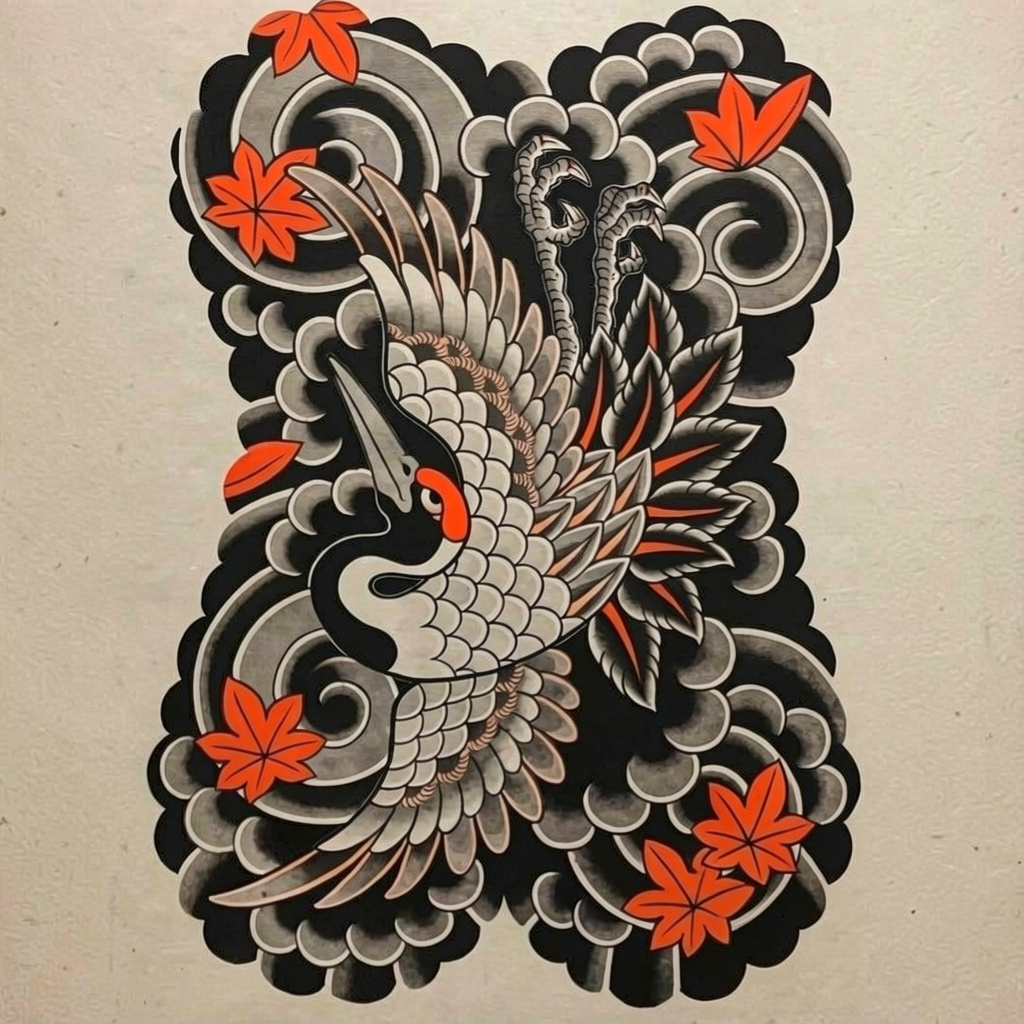
The crane is the most celebrated bird in Japanese culture. Where the phoenix is imperial and mythical, the crane is woven into everyday life — folded from paper by children, painted on porcelain, printed on the tail of airplanes. The red-crowned crane in particular is bound to Japan itself: its red cap echoes the rising sun, and it has been a symbol of the imperial household for centuries.
In irezumi it carries some of the clearest and most stable meanings of any motif. The crane is believed to live a thousand years, and so it stands for longevity without ambiguity. It bonds with a single partner for life, and so it stands for fidelity. It flies between heaven and earth, and so it carries a quality of peace — of something elevated above the ordinary world.
A well-known Japanese saying captures the crane's place in the hierarchy of longevity symbols: the crane lives a thousand years, the turtle ten thousand. The two are natural companions in irezumi, stacking their meanings when placed together. Pine and bamboo serve the same purpose — both evergreen, both enduring through seasons, both at home beside the crane.
The crane is also the central motif of Senbazuru (千羽鶴) — the practice of folding a thousand origami cranes over the course of a year to be granted a wish. It is one of the oldest living expressions of the crane's association with good fortune, and it continues today.
Famous narrative motifs
The stories behind the crane
Specific legends and figures that appear again and again in irezumi — each one its own composition with its own rules.
- 01鶴の恩返し / Tsuru no Ongaeshi
The Crane's Return of a Favor
A poor man saves a crane shot down by hunters. That night a beautiful woman appears at his door, claiming to be his wife. She asks only for a private room and his promise never to look inside. After seven days she produces a magnificent cloth — sell it at market, she tells him, and they will never go hungry. He does, and they prosper. But eventually he breaks his promise and looks inside the room. He finds a crane weaving the cloth from its own feathers, growing thinner with every thread. Discovered, the crane tells him it was the bird he rescued — and that now it must leave. It flies away and never returns, leaving only the cloth behind. The story is told as a fable about loyalty, sacrifice, and the cost of broken trust.
Source · Japanese folklore
Artwork — the crane in practice
"The crane lives a thousand years. It does not hurry. It does not waver. It simply endures."
What it's saying
In context
The meaning shifts with direction, pairing, and composition. A short label is never the whole answer.
Crane + tortoise
The most classical longevity pairing in Japanese art. The crane lives a thousand years; the turtle, ten thousand. Together they double down on the same meaning — an unambiguous wish for long life.
Crane + pine or bamboo
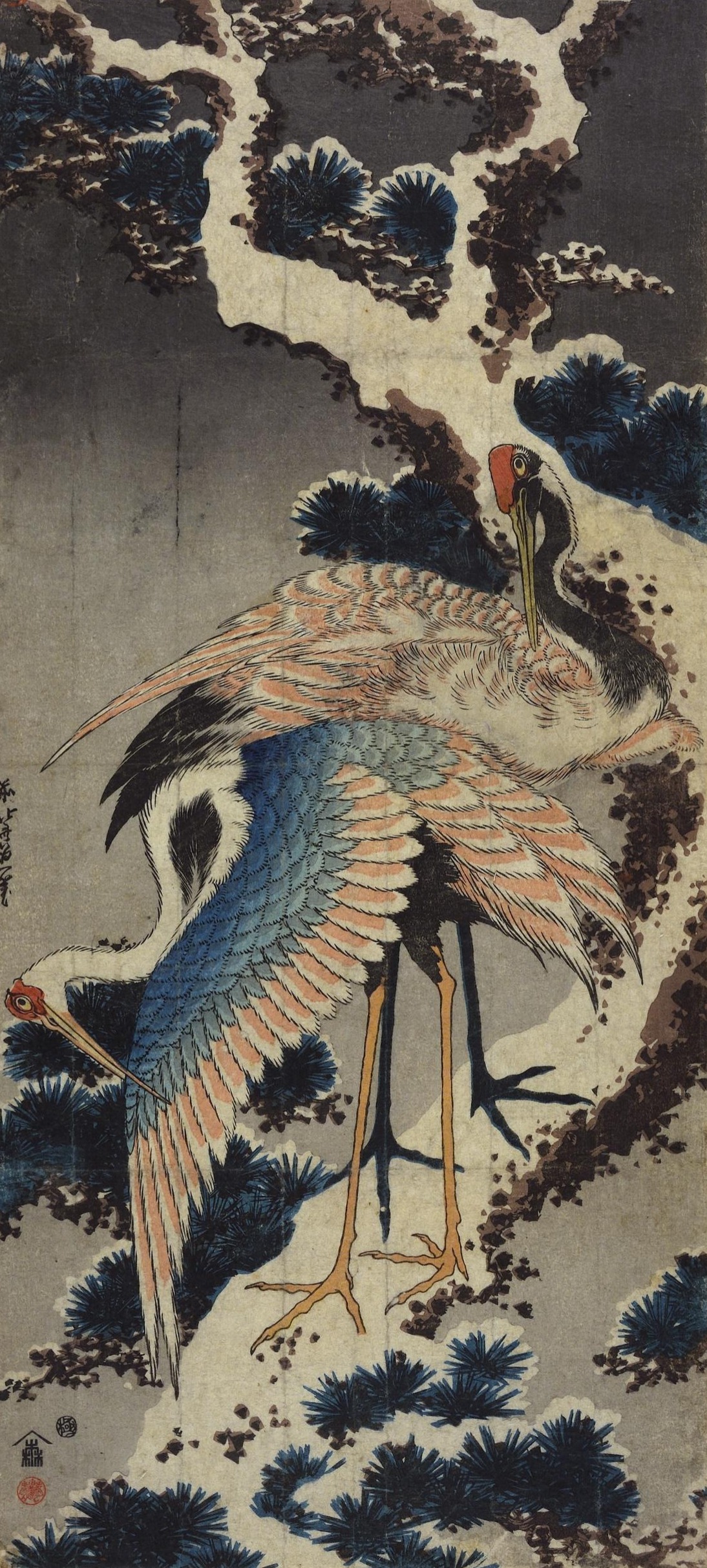
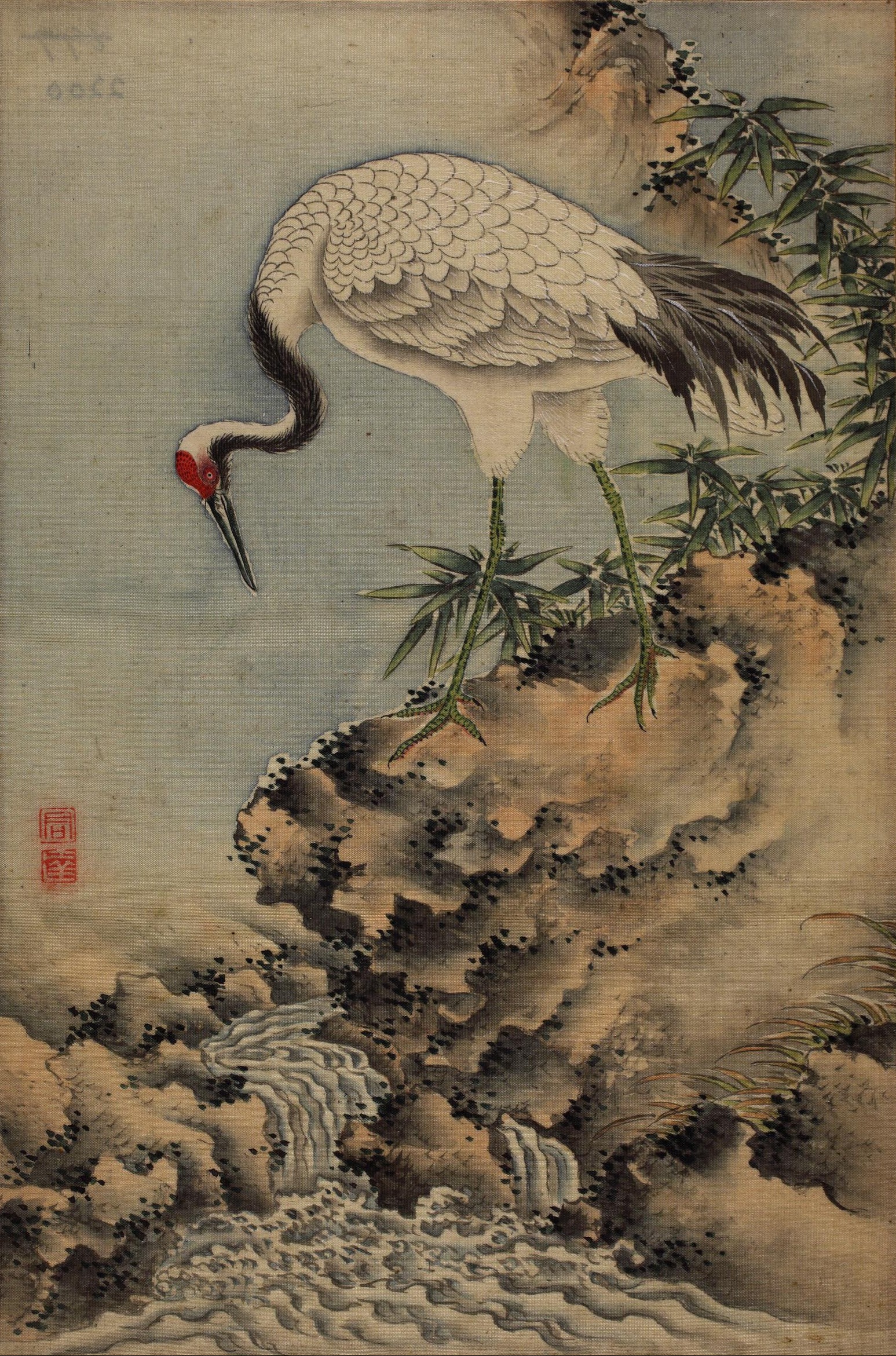
Both pine and bamboo stay green through winter, making them natural companions to a bird associated with endurance. The pairing reinforces the crane's longevity meaning without adding new symbolism — it deepens rather than changes the reading.
Two cranes together
The crane mates for life and performs elaborate courtship displays. A pair of cranes is one of the clearest symbols of a faithful, lasting union — used in wedding imagery and irezumi alike.
Crane + red sun
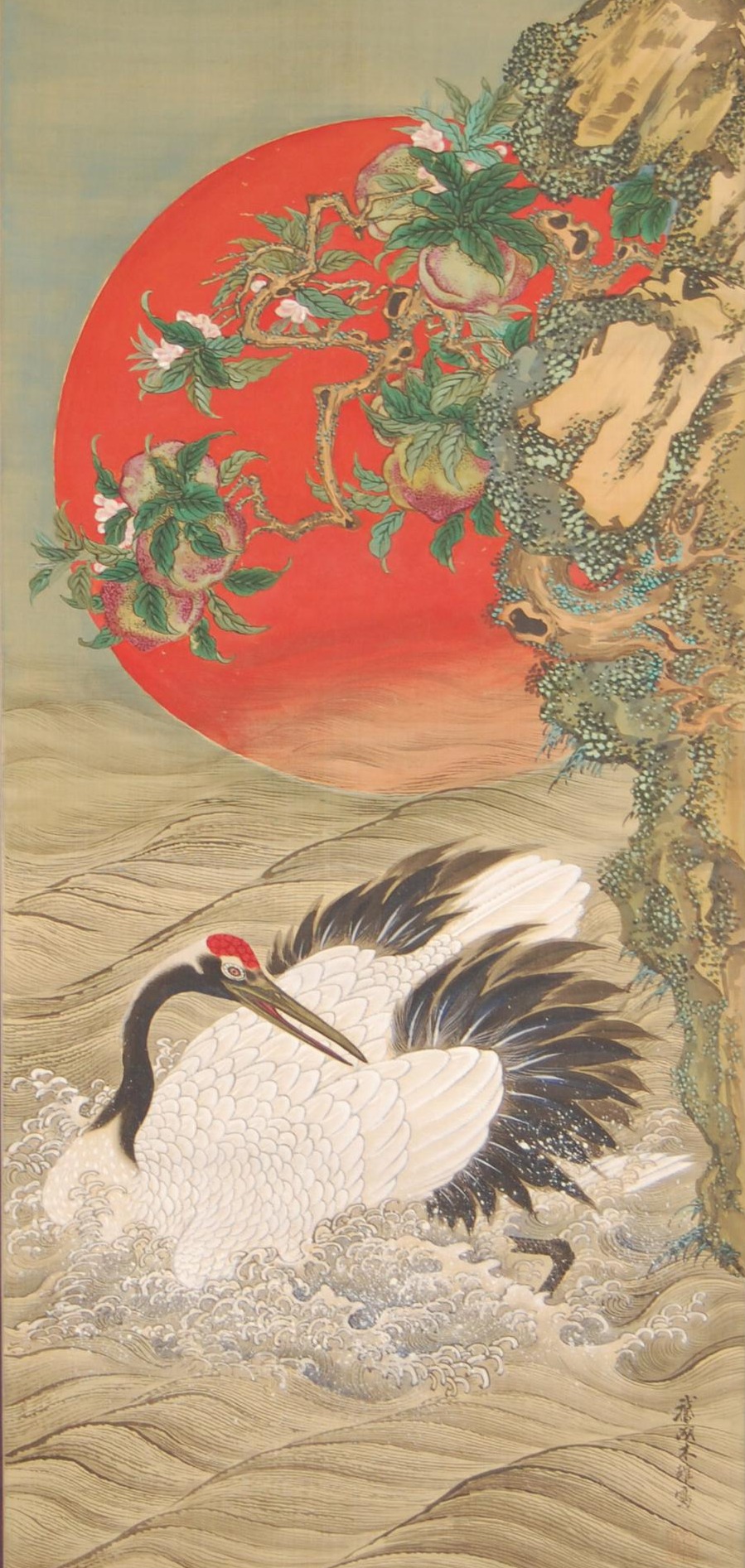
The red-crowned crane and the rising sun are both emblems of Japan itself. In irezumi this is one of the most distinctly Japanese compositions possible — two national symbols in a single image.