鷹 · HAWK
Hawk
The samurai's bird — a piercing gaze, a predator's instinct, and the symbol of those bold enough to rule.
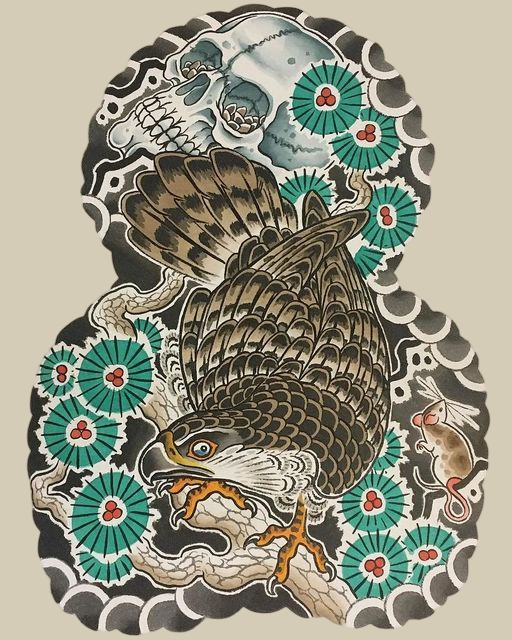
The hawk is Japan's equivalent of the eagle in the West. Linked to royalty, courage, and the ability to prevail, it carries the weight of centuries of aristocratic and military culture. Japanese makes no distinction between hawk and falcon — both are taka — though the notched beak of the falcon separates them visually in art.
Falconry shaped the hawk's meaning more than any myth. Hunting with a hawk was a deliberate violation of Buddhism's prohibition on taking life — a statement only the truly powerful could make without consequence. During the Heian period (794–1185) it belonged exclusively to the imperial court. From 1185 onward the samurai claimed it as their own, drawn to the bird's piercing gaze, fierce spirit, and predatory daring. Through the Kamakura era they dominated the art. By the Edo period the Tokugawa shoguns were so devoted to falconry they created an official government post — the takajo, master of hawks — whose holder sat within the government and held influence over military decisions.
In mythology the hawk served as a messenger of the gods and a guide of the righteous. Falconry appears in the Tale of Genji as a marker of noble life — a detail that cemented the bird's association with rank and refinement for centuries afterward.
In irezumi the hawk is an unambiguously masculine motif. It appears perched on rock or branch — alert, still, scanning — or caught mid-soar in a dynamic composition. It is almost never shown at the exact moment of the kill. The most charged pairing is with the snake: hawk swooping to seize it, or snake coiled around the bird's body. The confrontation reads on the surface as predator and prey, but the deeper meaning is a collision of forces — power against longevity. A hawk with cherry blossom takes a different direction entirely, bringing power and impermanence together in a single image.
Famous narrative motifs
The stories behind the hawk
Specific legends and figures that appear again and again in irezumi — each one its own composition with its own rules.
- 01鷹狩 / Takagari
The Samurai and the Hawk
When the samurai class rose to power from 1185 onward, they found in the hawk a mirror of everything they valued — sharpness of eye, ferocity of spirit, the willingness to strike without hesitation. Falconry had belonged to the imperial court for centuries, but the samurai took it and made it their own through the Kamakura era. By the Edo period it had reached its peak. Tokugawa Ieyasu, founder of the shogunate that would rule Japan for over two centuries, was famously devoted to falconry — he is said to have died shortly after a hawking trip, the sport with him until the very end. His devotion elevated the hawk from samurai symbol to an instrument of state: the Tokugawa created the official post of takajo, master of hawks, a role within the government itself with influence over military affairs. To carry a hawk was to announce your place in the world. source_note: Falconry documented in the Nihon Shoki; takajo post established under Tokugawa shogunate.
Source · Falconry documented in the Nihon Shoki; takajo post established under Tokugawa shogunate.
- 02初夢
Hatsuyume — The First Dream
In Japanese tradition the first dream of the new year — hatsuyume — sets the tone for everything that follows. The luckiest possible vision contains three things: Mount Fuji, a hawk, and an eggplant. Mount Fuji is the highest point in Japan, standing for the pinnacle of ambition. The hawk brings strength, power, and the ability to rise above. The eggplant — nasu (茄子) — is a wordplay on the verb meaning to succeed. Together they form a complete wish for the year ahead. The combination appears across traditional painting, woodblock prints, and irezumi.
Source · A well-established New Year's tradition in Japanese folklore.
Artwork — the hawk in practice
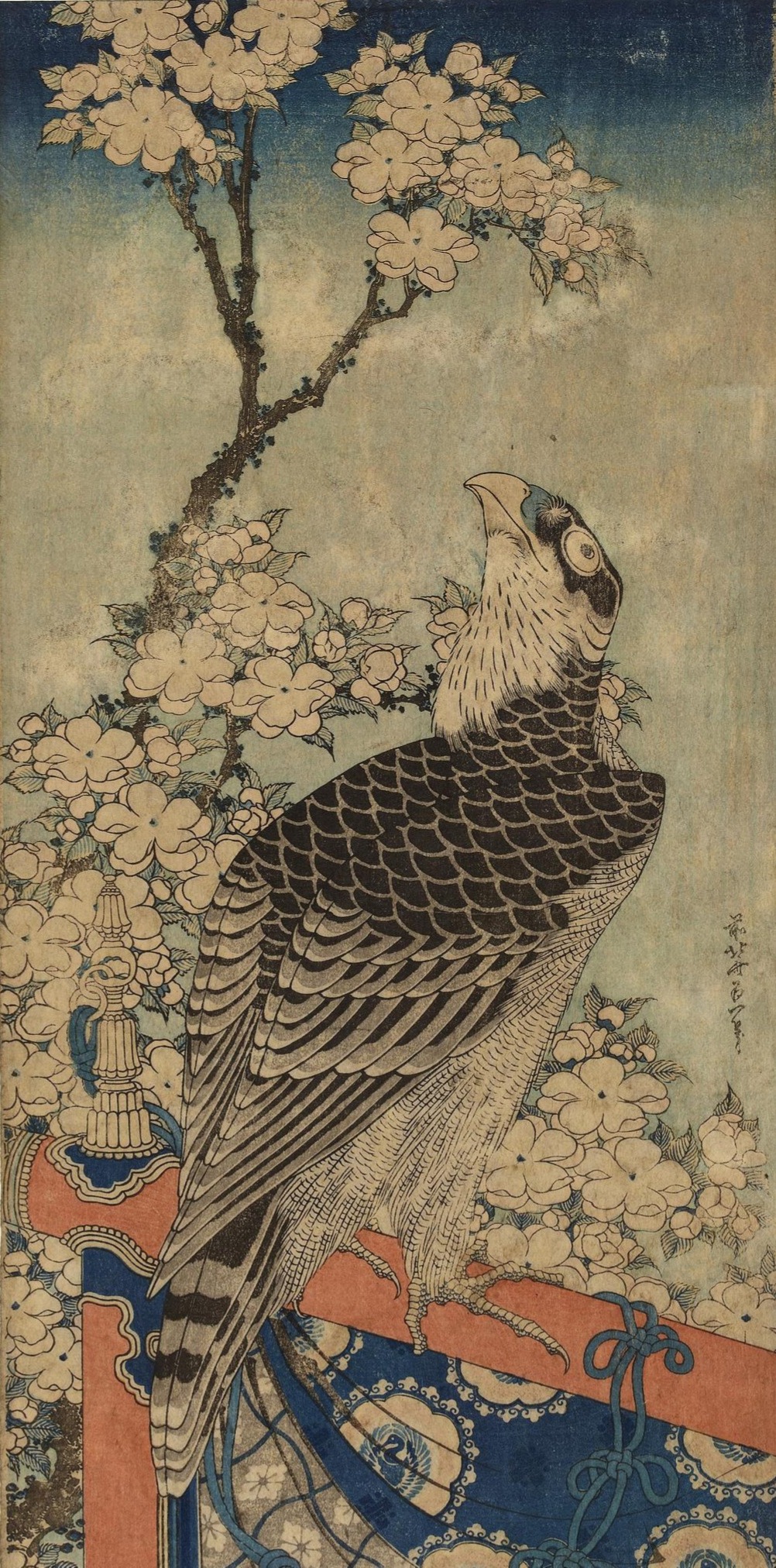
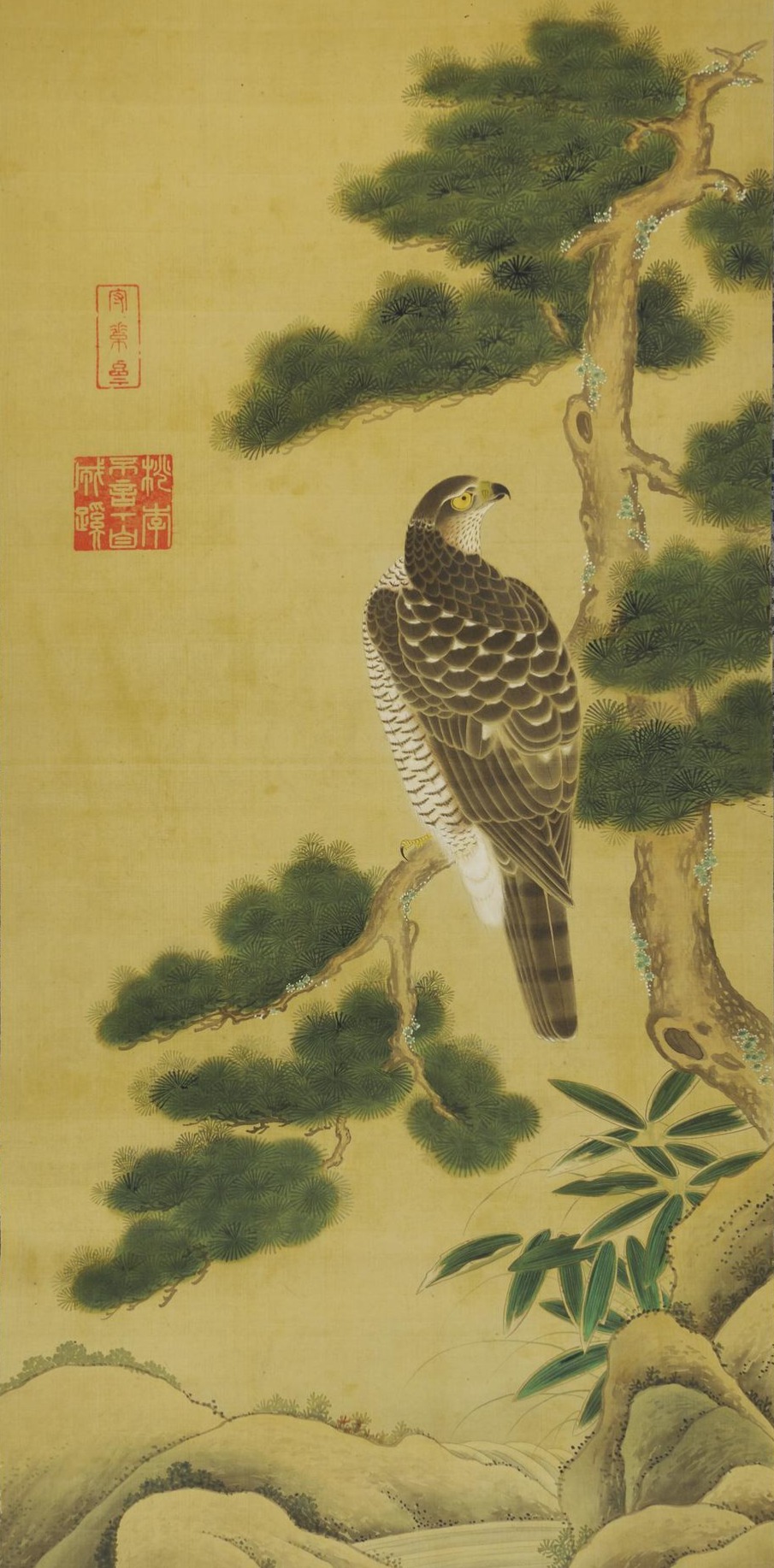
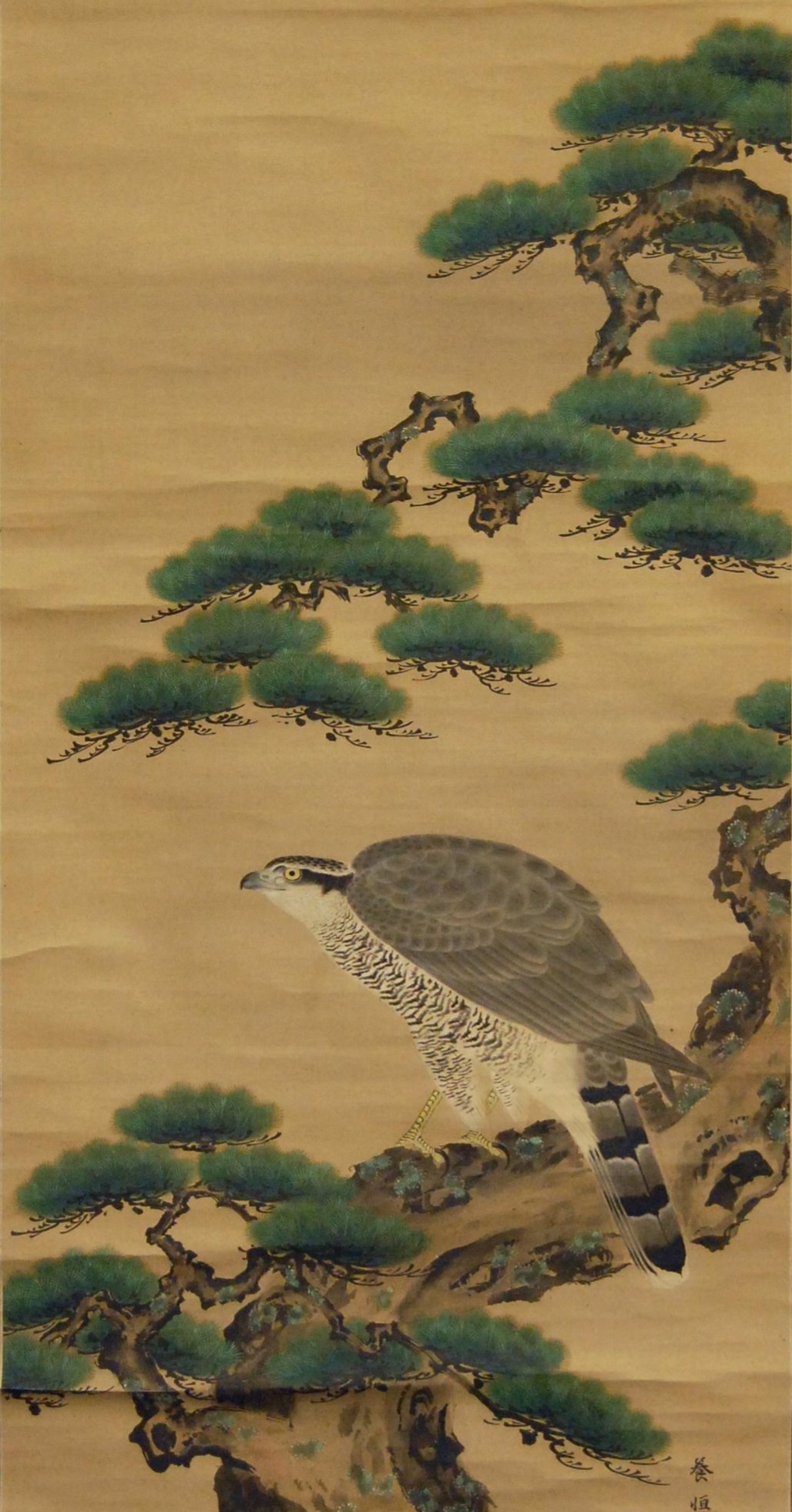
"The hawk does not announce itself. It perches, it watches, and when it moves, it has already won."
What it's saying
In context
The meaning shifts with direction, pairing, and composition. A short label is never the whole answer.
Hawk + snake
The most iconic hawk pairing in irezumi. On the surface it is predator against prey — the hawk diving, the snake coiling back. Thematically it runs deeper: the hawk carries power and martial spirit, the snake carries longevity. The two forces in collision make the image about more than a hunt.
Hawk + cherry blossom
Power meeting impermanence. The hawk is absolute in its strength and focus; the cherry blossom falls regardless. The pairing does not resolve the tension — it holds it. A statement about the nature of force in a world where nothing lasts.
Hawk + pine trees + camellias
A classical combination with deep roots in traditional Japanese painting. Pine carries endurance through all seasons; camellia brings quiet elegance. Around the hawk they soften nothing — they frame its authority in the natural world it rules.
Hawk perched vs hawk in flight
Posture carries meaning. Perched on rock or branch the hawk is patience and control — watchful, not yet committed. In full soar it becomes aspiration and freedom, the ability to rise above. Both are common in irezumi; the choice shifts the reading from restrained power to power released.