虎 · TIGER
Tiger
The mightiest of beasts — a creature Japan never saw but never stopped imagining, and the samurai's ultimate symbol of power.
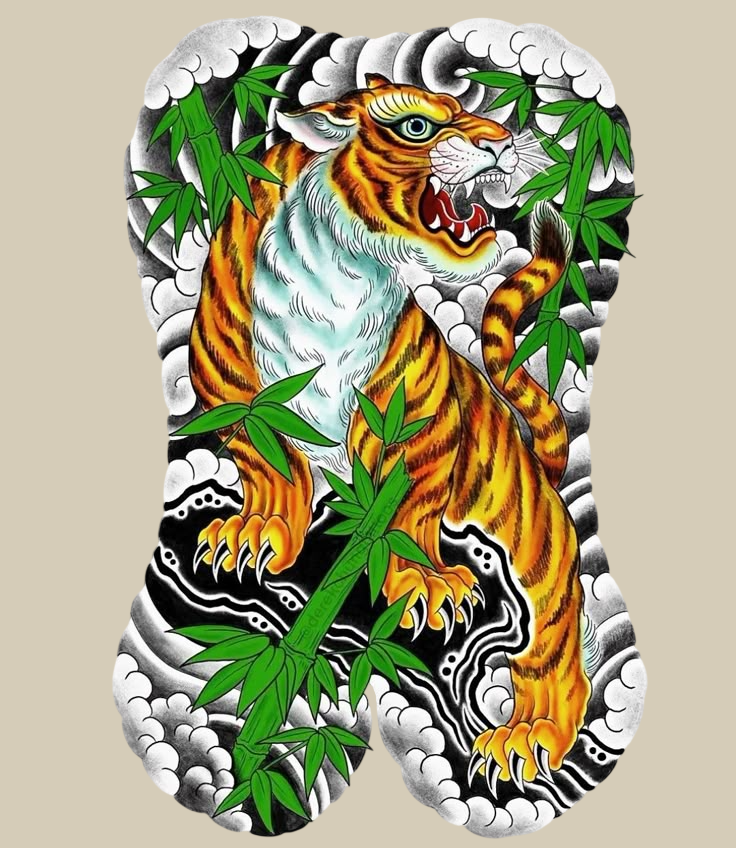
No tiger has ever lived in Japan. The animal arrived as an idea — imported through Chinese astrology around the seventh century, carried by images and stories rather than direct encounter. Early Japanese artists worked entirely from Chinese motifs, never having seen the real animal, which pushed the designs toward the stylized and expressive. Eyes became unnaturally large. Stripes flowed like waves. The tiger became something greater than its real counterpart — a creature of imagination as much as nature. When Japanese travellers returned from China confirming tigers were real, it only deepened the mythology: if tigers existed, then surely dragons and other magical beasts did too.
The tiger is the only real animal among the Four Divine Beasts (四神 / Shi Jin) — the others being the Black Tortoise of the North, the Azure Dragon of the East, and the Vermilion Bird of the South. It guards the West. A myth held that the tiger lived a thousand years and turned white at five hundred. These white tigers — byakko (白虎) — were believed to appear only when the emperor ruled with absolute virtue or when the world was truly at peace.
The tiger's power and virility aligned naturally with the samurai spirit and it became the official symbol of the military class. When emperors went to war, their banners displayed tigers alongside red peonies — botan no tora — red for the blood to be shed on the battlefield. Enemies who saw that banner understood the full weight of imperial force was descending on them.
In irezumi the tiger is almost always shown with its mouth open, to ward off evil spirits. This makes it the natural counterpart to the dragon, whose mouth stays closed to keep good spirits in. Together they form one of irezumi's most enduring compositions — tiger on rocks snarling against the wind, dragon rising from churning water — a feng shui (風水) pairing of wind and water, two elemental forces in balance. The tiger is also shown amid bamboo, the only creature thought strong enough to push through a dense grove. That detail carries its own meaning: shelter given to the powerful.
The traditional irezumi tiger is yellow and black — yellow being the color of imperial rule in China. The striped pattern on the forehead was said to naturally form the character for king (王). The tiger's feminine counterpart in irezumi is hyoo, the leopard, which shares many of the same martial qualities.
Famous narrative motifs
The stories behind the tiger
Specific legends and figures that appear again and again in irezumi — each one its own composition with its own rules.
- 01牡丹の虎 / Botan no Tora
The Imperial War Banner
When the emperor went to war, his banners carried tigers and red peonies — botan no tora. The tiger was already the symbol of the military class and the samurai. The red peony stood for imperial rank and the blood that would be shed. Together they announced something beyond ordinary military force: the full power of the emperor, descending. Enemies who recognized that banner understood what was coming. The combination passed directly into irezumi as one of the most charged pairings in the tradition.
Source · Imperial military symbolism, documented across Japanese historical sources.
- 02鍾馗 / Shoki
Shoki Riding the Tiger
Shoki is the demon queller — a figure from Chinese legend absorbed deeply into Japanese art and irezumi. He is most often shown astride a tiger, using the mightiest of beasts as his mount in the pursuit and destruction of oni. The pairing makes visual sense: only a figure of Shoki's supernatural authority could command a tiger, and only a tiger would be a worthy vehicle for the hunt. The image became one of the most recognizable narrative compositions in all of irezumi.
Source · Depicted by Kawanabe Kyosai (1831–1889) and many others throughout the Edo period.
- 03白虎 / Byakko
The Byakko — White Tiger of the West
A myth held that the tiger lived a thousand years and turned white at five hundred. These white tigers — byakko — were not ordinary animals. They were omens of a just and virtuous reign, believed to appear only when the emperor governed with absolute moral authority or when genuine peace had settled over the world. The tiger is the only real animal among the Four Divine Beasts, the cosmic guardians of the four cardinal directions. That distinction — real among the mythical — gave it a different kind of power than the dragon or the phoenix. It did not need to be invented. It simply needed to be understood.
Source · Chinese and Japanese cosmological traditions
Artwork — the tiger in practice
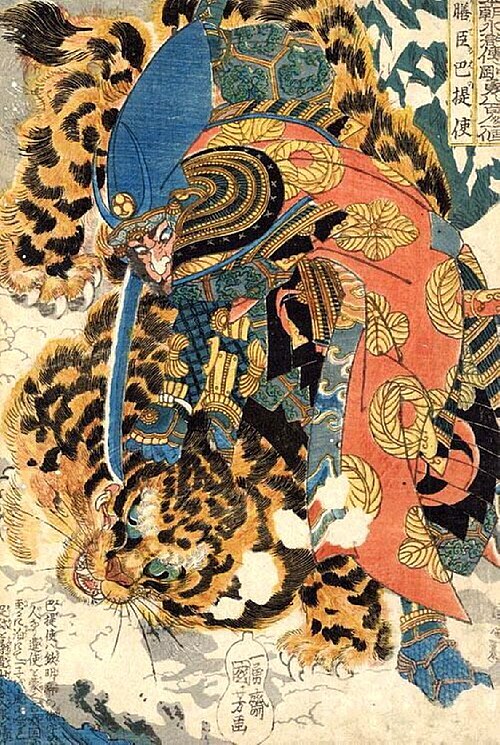
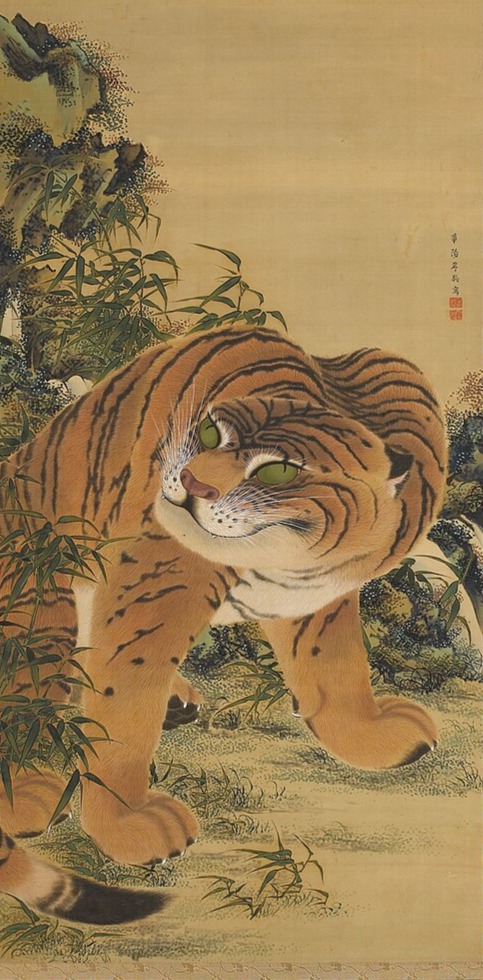
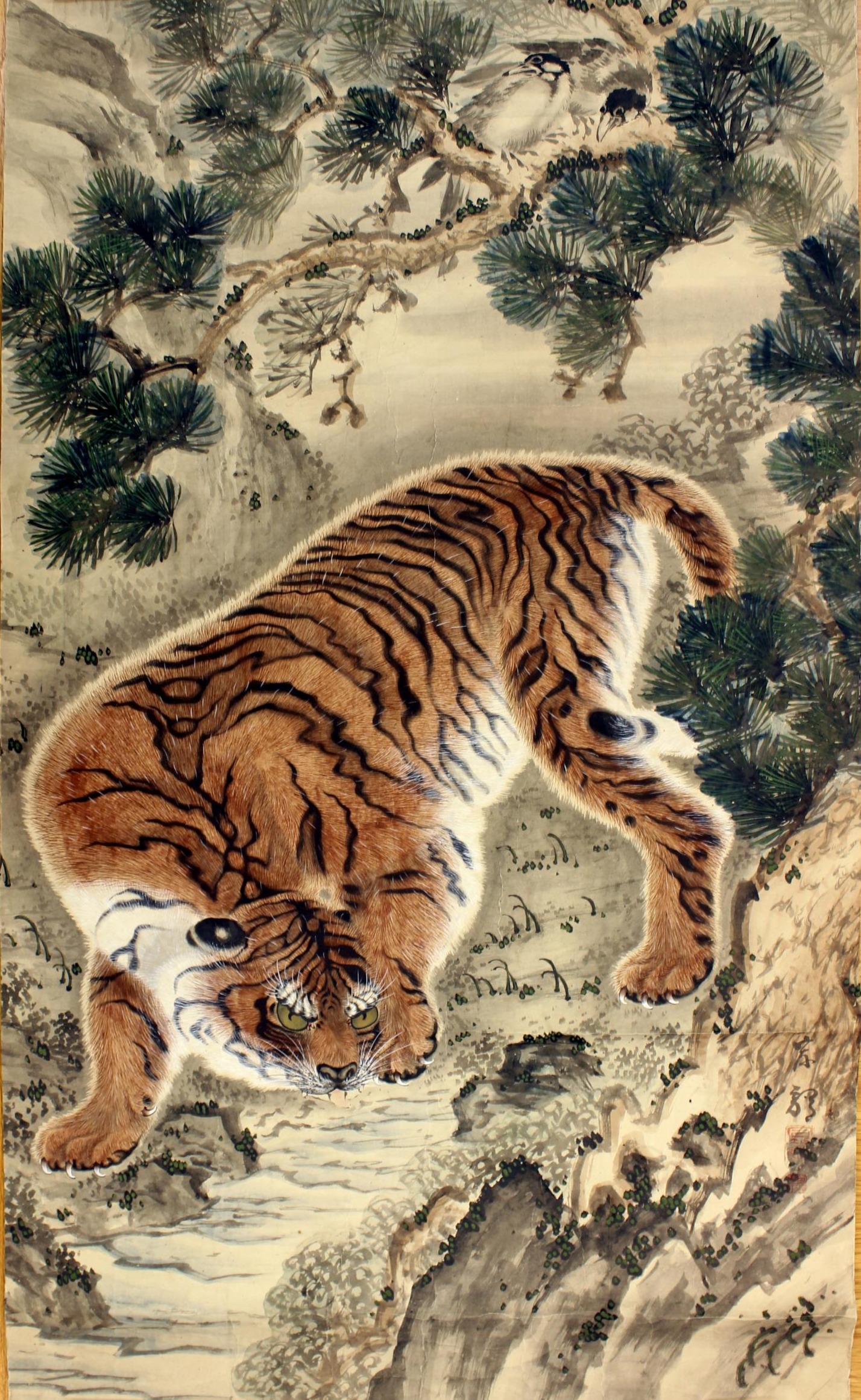
"Open mouth, unblinking eye — the tiger does not guard. It dominates."
What it's saying
In context
The meaning shifts with direction, pairing, and composition. A short label is never the whole answer.
Tiger + dragon
One of irezumi's defining pairings. The tiger rules the land, the dragon rules the sky— together they form a feng shui (風水) composition of elemental forces in balance. The classical irezumi arrangement places the tiger on rocks against the wind, the dragon rising from churning water. A secondary reading frames them as opposites — tiger carrying earthly force and danger, dragon representing the divine — though the balanced, harmonious reading is the more established of the two.
Tiger + red peonies
The botan no tora — tiger with red peonies — is an imperial composition with roots in the war banners of the emperor. Red peonies stand for rank and for blood. The tiger stands for the military class and raw power. Together they are one of the most explicitly martial pairings in all of irezumi.
Open mouth vs closed mouth
The irezumi tiger almost always shows its teeth — mouth open to drive away evil spirits. This is the direct counterpart to the dragon, whose mouth stays shut to keep good spirits from escaping. When paired together, the two mouths complete each other. A tiger with a closed mouth is rare and carries a different, quieter reading.
Tiger vs hyoo
The tiger is masculine. Its feminine counterpart in irezumi is hyoo — the leopard — which shares the tiger's martial qualities but carries a different energy. The two are rarely paired together; the distinction is one of gender reading within the same tradition of powerful predator imagery.