蓮華 · LOTUS
Lotus
The flower that rises from mud unsoiled — Buddhism's most sacred symbol and irezumi's purest expression of enlightenment.
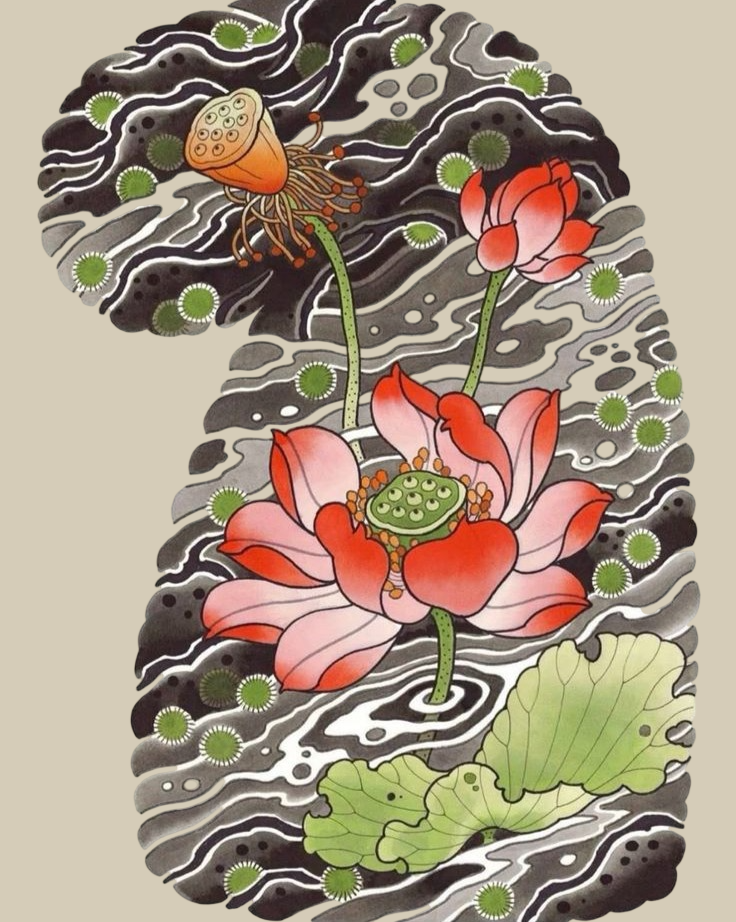
The lotus (蓮華 / Renge) carries more religious weight than any other flower in irezumi. It grows in mud, rises through water, and blooms above the surface untouched by what it came from. That journey is the whole point — the human capacity to transcend worldly impurity and attain enlightenment. The lotus has its own sutra, the Lotus Sutra (妙法蓮華経 / Myōhō Renge Kyō), believed to contain the teachings of the historical Buddha Shaka Nyorai, stating that all beings are capable of reaching Buddhahood.
In irezumi the lotus functions in two ways. As the main subject it stands alone, a complete statement of spiritual aspiration. As a complementary element — keshoubori — it serves as a floral throne for Buddhist deities, carried in hand, or worn as a crown. Buddhas and bodhisattvas are almost always depicted seated or standing on lotus. The flower is also connected to funeral ritual through Buddhist belief that arriving souls appear seated within a lotus in heaven.
The bloom stage carries meaning. A closed bud represents potential — the journey not yet begun. A half-open flower shows the path being walked. Full bloom is achieved enlightenment. The color deepens the reading further: pink is the true flower of the Buddha, white represents spiritual perfection, red carries love and compassion, blue stands for wisdom, and black — the rarest reading — carries authority, rebellion, and death, the inversion of everything the light-colored lotus stands for.
Famous narrative motifs
The stories behind the lotus
Specific legends and figures that appear again and again in irezumi — each one its own composition with its own rules.
- 01妙法蓮華経 / Myōhō Renge Kyō
The Lotus Sutra
The Lotus Sutra is the most important text in Japanese Buddhism — so central that the lotus flower became inseparable from Buddhist identity across all of East Asia. It contains the teachings of the historical Buddha Shaka Nyorai and carries one foundational message: every living being, without exception, is capable of attaining Buddhahood. The sutra gave the lotus its role as the symbol of that potential — a flower growing in mud that blooms in perfect purity above it, the same journey the sutra asks of every human being. In irezumi, every lotus carries the weight of that text whether or not the wearer knows it.
Source · The Lotus Sutra is the doctrinal foundation of Tendai and Nichiren Buddhism, both deeply influential in Japan.
Artwork — the lotus in practice
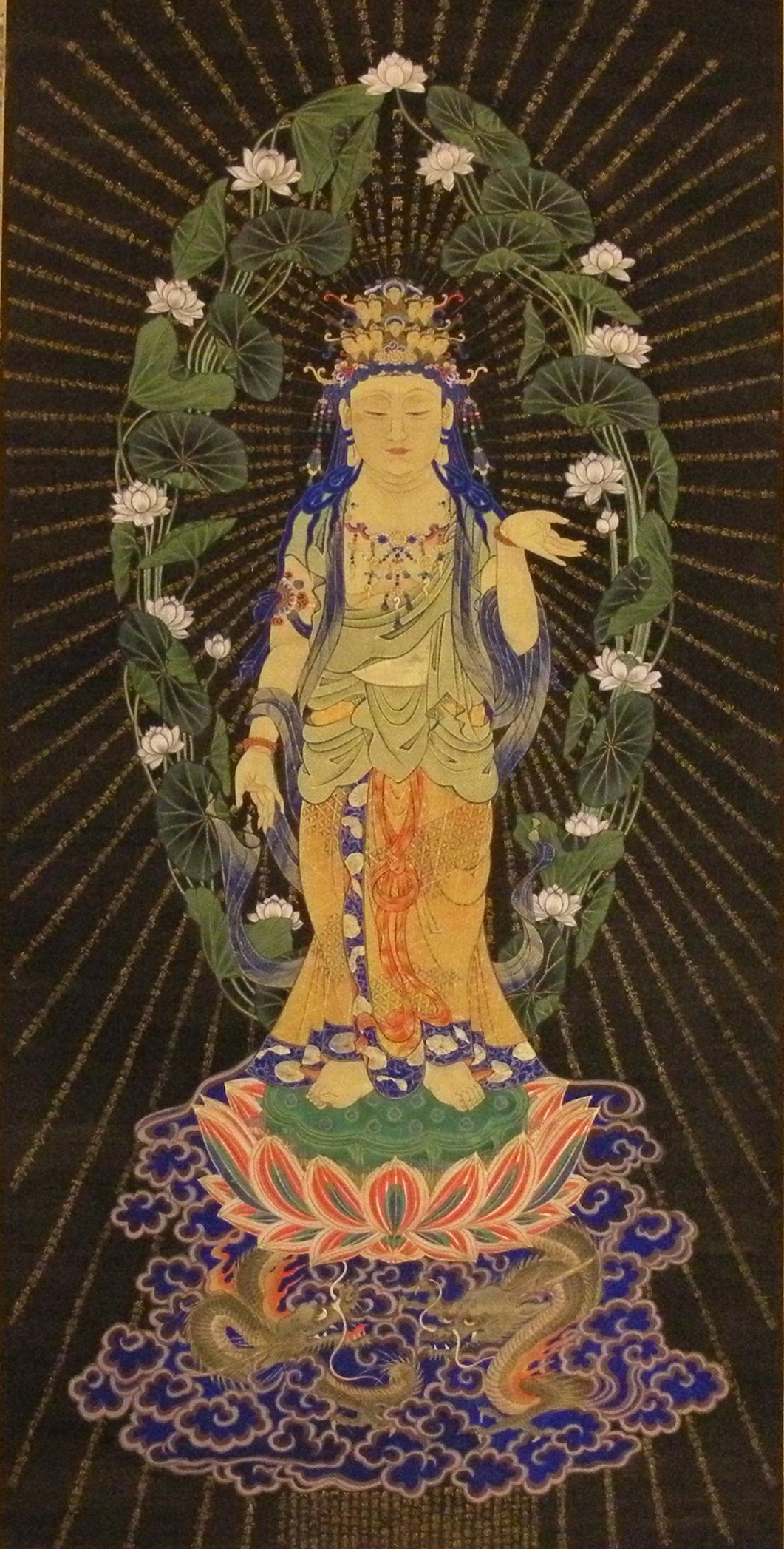
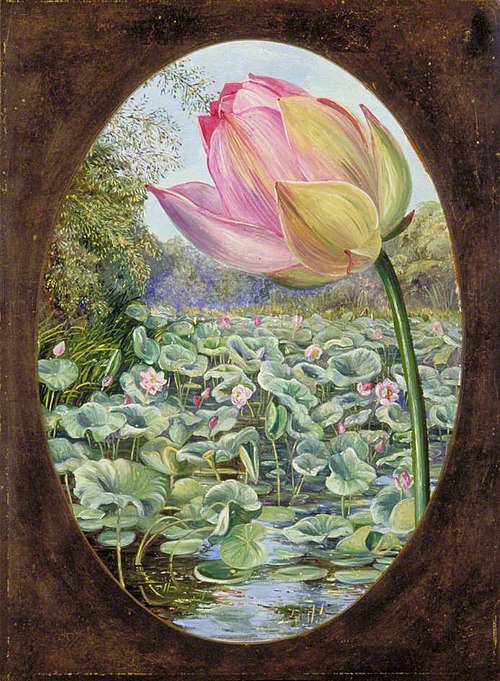
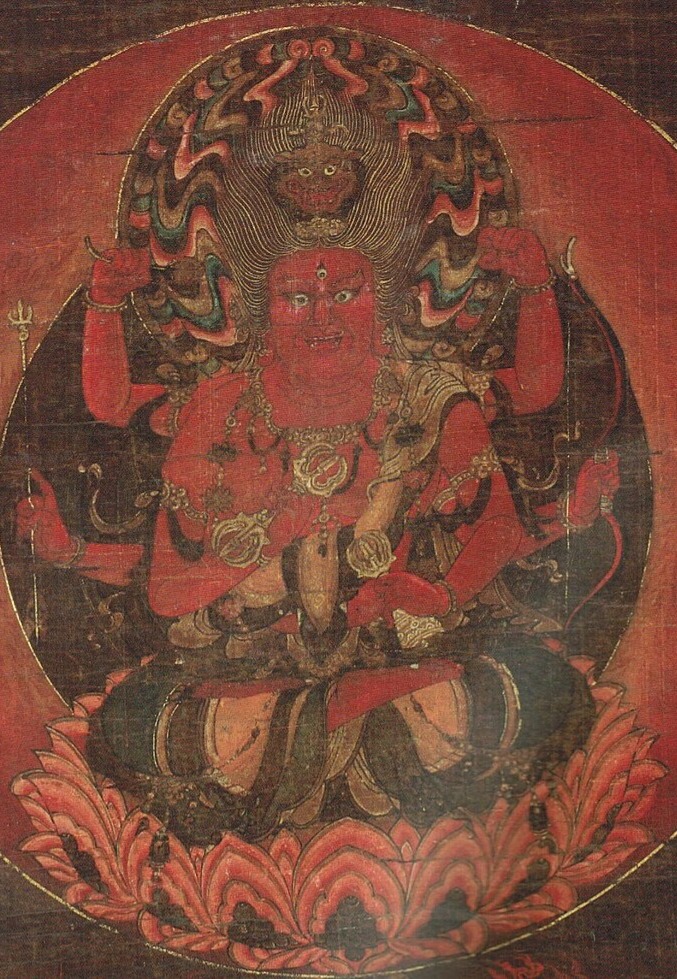
"From the mud it rises. On the surface it blooms. It carries none of what it came from."
What it's saying
In context
The meaning shifts with direction, pairing, and composition. A short label is never the whole answer.
Lotus bloom stage
The stage of the bloom carries its own reading in Buddhist iconography and irezumi. A closed bud represents potential — the path not yet walked. A half-open flower shows the journey underway. Full bloom is achieved enlightenment. The choice of bloom stage in a composition is not decorative — it is the meaning.
Lotus color
Pink is the true flower of the Buddha — legend holds that a lotus bloomed wherever he stepped. White represents spiritual perfection. Red carries love and compassion. Blue stands for wisdom and knowledge. Black is the inversion of all of these — authority, rebellion, and death — a rare and deliberately contrary reading.
Lotus as Buddhist throne
In irezumi the lotus most commonly appears as the platform on which Buddhist deities sit or stand. This is not decoration — it is doctrinal. The lotus throne signals that the figure above it has transcended the impure world from which the flower rose. Kannon, Fudo Myo-o, and Buddha figures are almost always shown this way in traditional compositions.
Lotus + koi
A natural pairing rooted in shared water symbolism. The koi fights upstream through the same muddy waters the lotus rises from — perseverance and transcendence occupying the same element. The koi adds movement and struggle to the lotus's stillness and purity, two forces that complement rather than contradict each other.
Lotus and funeral ritual
The lotus connects to death as well as enlightenment. In Buddhist belief, souls arriving in heaven are depicted seated within a lotus flower. Its presence in funeral iconography runs alongside its spiritual meaning — the flower that grows in Buddhist heaven as much as in earthly water.